 TechBaton
Education And Training
Applied AI education for companies, universities, and schools.
The problem
Most AI education programs are generic, tool-centric, and disconnected from day-to-day work or study, which means people attend sessions, collect certificates, and still feel unsure how to use AI in real situations. Corporate surveys consistently report that a majority of employees cannot apply their AI training to their actual jobs, and that one-off workshops fail to keep up with how fast the technology evolves.
In education, universities and schools are under pressure to respond to AI but often lack structured guidance, current industry context, or staff who feel confident teaching both the technical and societal dimensions of AI. The result is a growing gap: organizations and students are surrounded by AI tools, but lack practical, responsible ways to integrate them into work, learning, and decision-making.
We help close this gap by designing education and training that is grounded in real workflows and real industry practice, not abstract "AI literacy" modules.
Our approach
We work with corporate groups, professional teams, universities, and schools to design AI education that is role-specific, hands-on, and continuously updated, so that participants can immediately apply what they learn. Our programs are built around real scenarios from your environment — customer work, internal processes, research, or classroom tasks — rather than generic examples, and always include guided practice inside the tools people actually use.
For corporate groups, we combine live workshops, applied labs, and tailored handbooks into a coherent capability-building journey. These handbooks become your internal "AI playbooks": practical guidelines on how to use AI in your organization, what good looks like in your context, and how to stay within your policies and regulations. For universities and schools, we design guest lectures, short courses, and faculty sessions that bring current industry use cases, risks, and governance questions into the classroom, giving students a realistic picture of how AI is being deployed today.
Across all audiences, we emphasize three pillars: understanding (how modern AI systems work and where they fail), application (how to embed AI into concrete tasks, projects, and workflows), and responsibility (how to manage bias, privacy, academic integrity, and organizational risk). This combination helps learners build confidence not just in "using a tool", but in exercising judgment about when and how to use AI.
Tech stack examples
Corporate AI programs
Multi-session programs for leadership, managers, and practitioner teams that cover AI fundamentals, applied prompting, workflow redesign, and risk/controls, all anchored in your own use cases.
AI usage handbooks
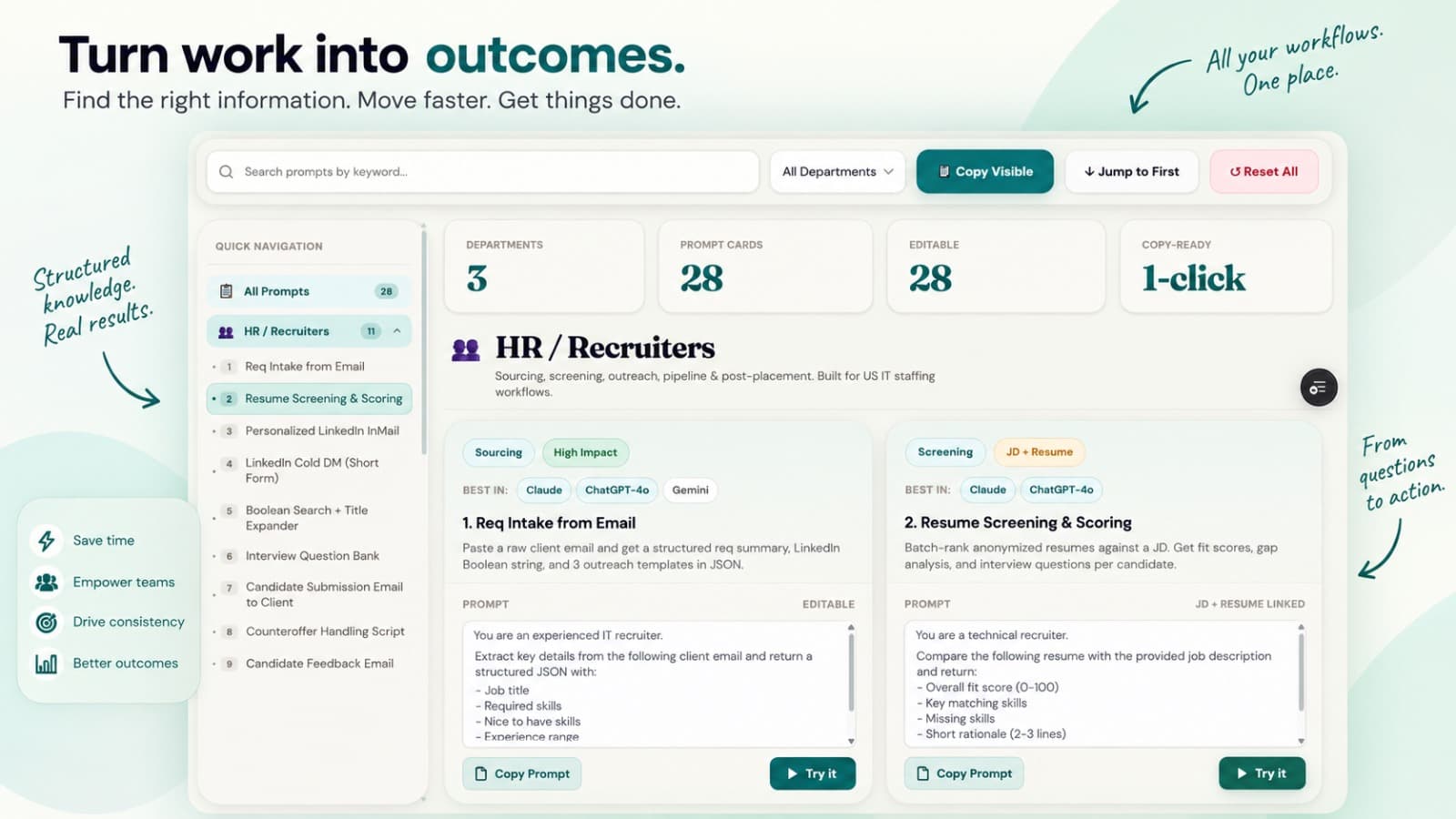
Custom "how we use AI here" handbooks for corporate groups and functions (for example, sales, marketing, operations, HR) that define approved tools, example prompts, do/dont patterns, and escalation paths when in doubt.
Playbooks for specific roles
Short, actionable guides for roles such as analysts, product managers, consultants, or support teams outlining AI patterns that fit their day-to-day work.
University and college engagements
Guest lectures, seminar series, and project-based modules that give students exposure to real-world AI applications, trade-offs, and career paths, aligned with their discipline.
School programs and teacher training
Age-appropriate AI awareness sessions for students and practical workshops for teachers on using AI to support learning while maintaining academic integrity and critical thinking.
Assessment and certification
Practical exercises, scenario-based assessments, and lightweight certification of applied capability, so organizations can track skill development rather than just course completion.
Case example
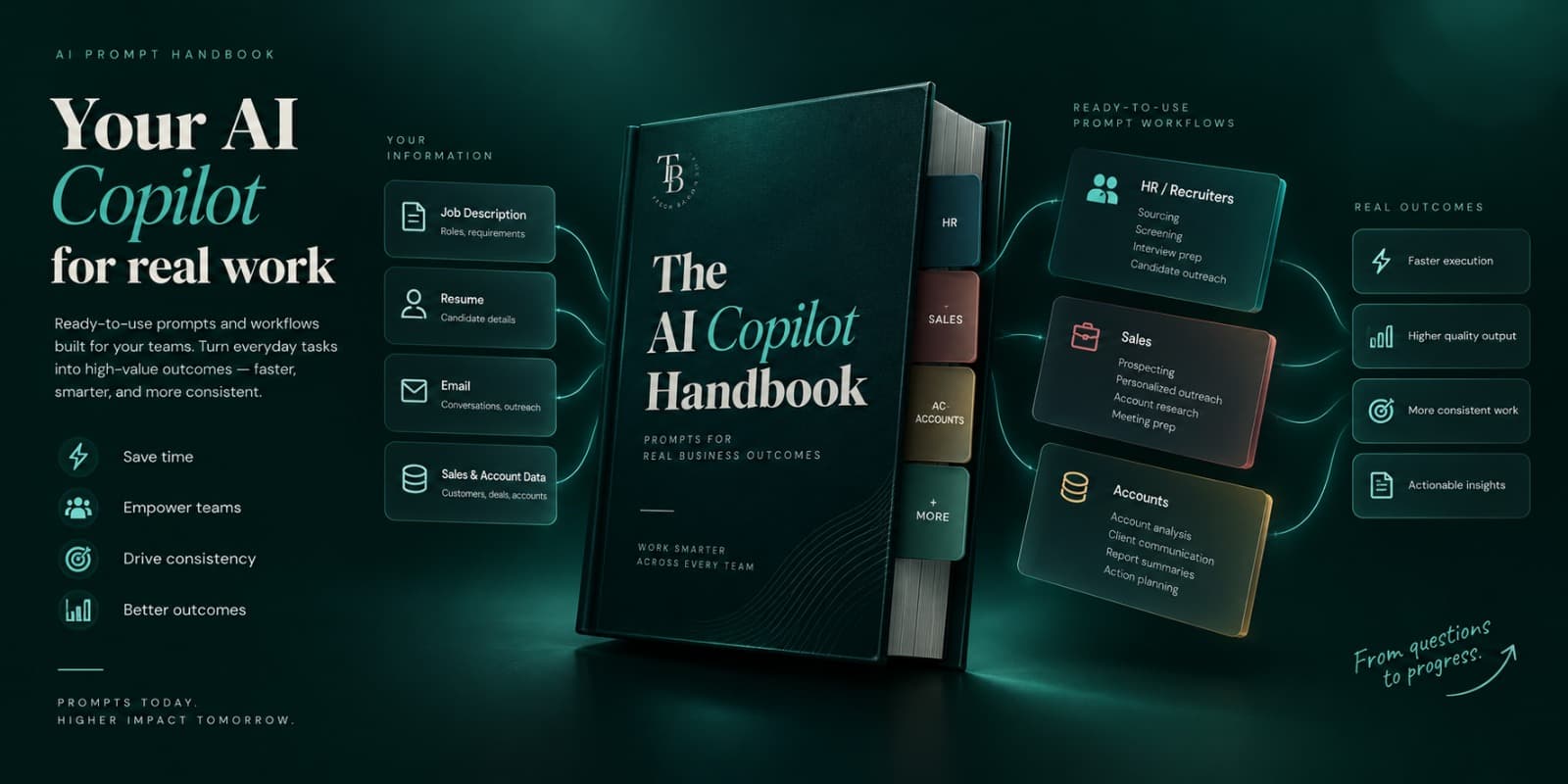
For a large corporate group with multiple business units, we designed a company-wide AI education program and a set of tailored handbooks. Leadership workshops aligned on where AI should and should not be used; function-specific sessions for consulting, operations, and support teams focused on concrete workflows such as research, documentation, and analysis; and a central "AI usage handbook" codified policies, examples, and best practices in a format that teams could reuse and extend. This gave the organization a shared language and set of guardrails for AI, while making it clear how different roles could benefit in their day-to-day work.
In parallel, we partnered with universities and schools to deliver AI education that reflects what is actually happening in industry. At the university level, we contributed modules on modern AI applications, ethical and regulatory developments, and live case studies drawn from real projects, helping students bridge theory and practice. At the school level, we ran sessions that demystify AI for students, show responsible ways to use it for learning, and equip teachers with practical strategies and examples they can bring back to their classrooms.
Together, these engagements ensure that both today's workforce and tomorrow's graduates develop not just AI awareness, but practical, grounded skills they can carry into their careers.